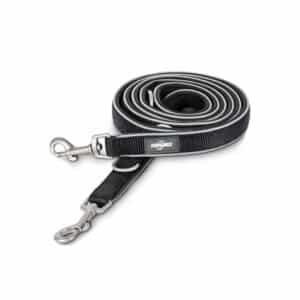
For buyers sourcing a double-braided dog leash from China, terms like “double braid” and “marine rope” show up in almost every product listing, but few suppliers explain what these terms actually mean for real-world performance. This guide breaks down the construction, strength data, and hardware standards behind a well-made double-braided dog leash, so buyers can evaluate a nylon rope dog lead supplier with confidence instead of guesswork.
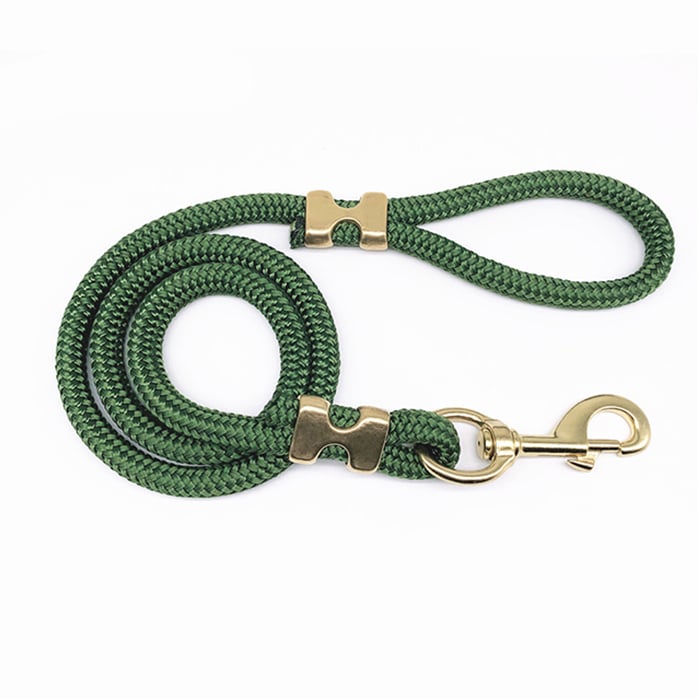
Why Double-Braided Construction Outperforms Single Braid
Benefits of Choosing a Double-Braided Dog Leash
A single-braid rope leash exposes one layer of fiber directly to friction, which means it frays and loses shape quickly under daily use. A double-braided dog leash uses two independent layers: an inner core that carries most of the load, and an outer cover that absorbs surface abrasion. In field use, this two-layer structure typically extends wear life by 30-50% compared to single-braid leashes, which matters most for medium and large dogs that pull hard on daily walks.
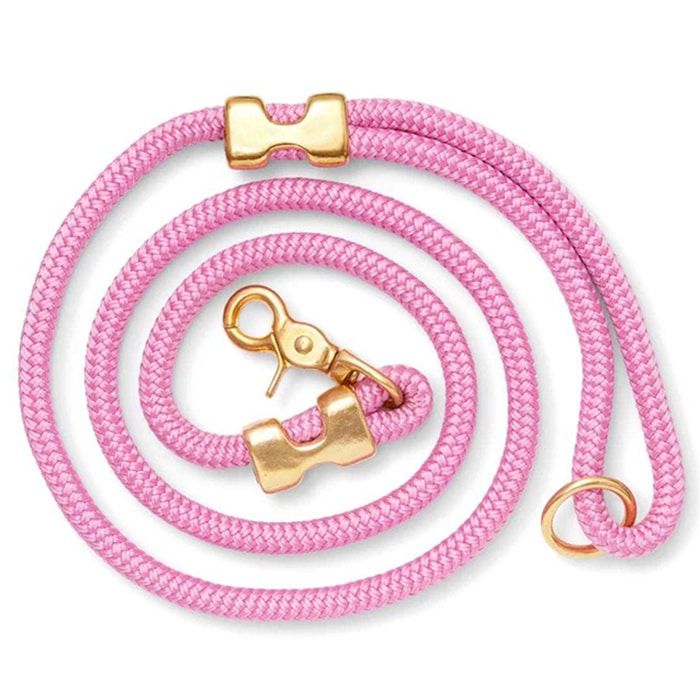
Marine Rope Dog Leash: Built for Weather, Not Just Walks
A marine rope dog leash is made from rope originally engineered for boats and docks, which means it is designed to resist UV exposure, saltwater, and repeated soaking without rotting or stiffening. This is why a marine rope dog leash consistently outperforms basic webbing leashes in coastal and high-rainfall markets across Europe and North America, where a standard leash would break down within a season.
Nylon Rope Dog Lead: Strength Data by Diameter
The core material of a nylon rope dog lead determines both strength and safety margin. Based on standard industry reference ranges for double-braided nylon rope, typical breaking strength by diameter is as follows:
- 6mm nylon rope dog lead: approximately 350-500kg breaking strength
- 8mm nylon rope dog lead: approximately 600-800kg breaking strength
- 10mm nylon rope dog lead: approximately 900-1200kg breaking strength
- 12mm nylon rope dog lead: approximately 1300-1600kg breaking strength. These figures are general industry reference ranges and can vary by braid density and testing standard (such as ASTM D6268), so buyers should request pull-test data on samples before confirming a bulk order.
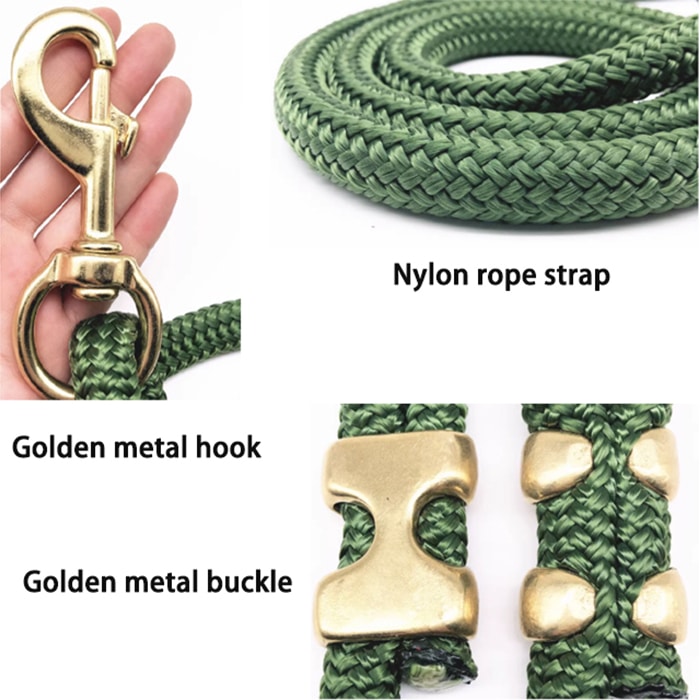
Why Nylon Outperforms Polyester and PP for Dog Leashes
Compared with polyester or polypropylene rope, nylon offers higher elastic recovery, meaning a nylon rope dog lead absorbs shock when a dog pulls suddenly, reducing strain on both the handler’s hand and the dog’s collar or harness. Nylon also holds up better against repeated abrasion at equivalent diameters, which is why most double-braided dog leash factories default to nylon rather than PP for the main rope body.
Solid Brass Hardware: Why It Matters More Than the Rope
The rope is only half of a double-braided dog leash; the hardware determines long-term reliability. Two common options exist in the market:
- Zinc alloy with electroplating — lower cost, but prone to coating failure and rust once the plating wears through, especially in humid or coastal conditions.
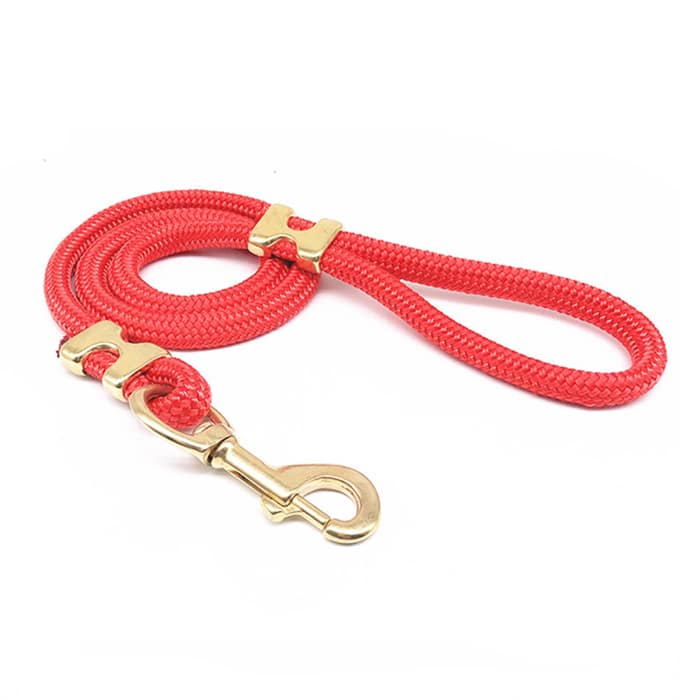
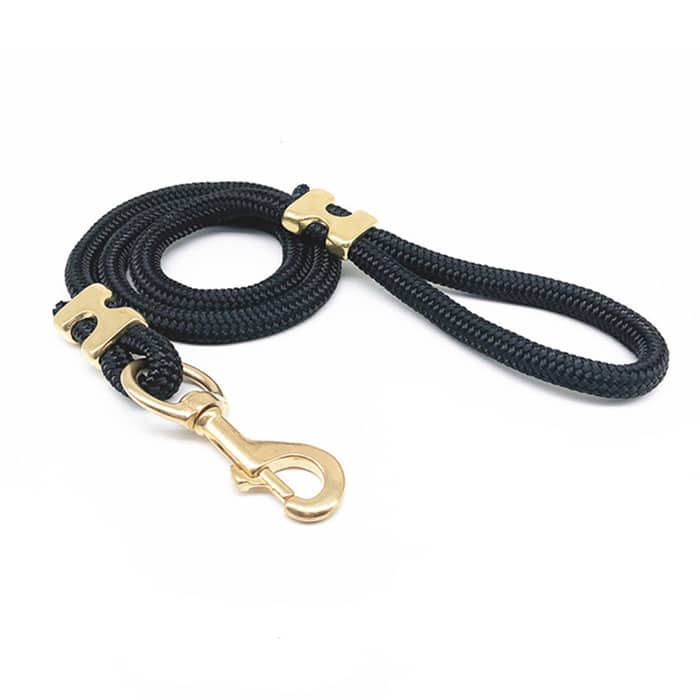
- Solid brass hardware — naturally corrosion-resistant even if the surface plating wears down, since the base metal itself resists oxidation. In neutral salt spray (NSS) reference testing, solid brass hardware typically holds up past 48 hours without visible corrosion, while standard zinc-alloy plated hardware often shows rust within 24 hours. For buyers building a private-label or OEM marine rope dog leash program, solid brass hardware also supports laser-engraved or embossed logos directly on the buckle, D-ring, or O-ring, giving the finished leash a retail-ready branded look.
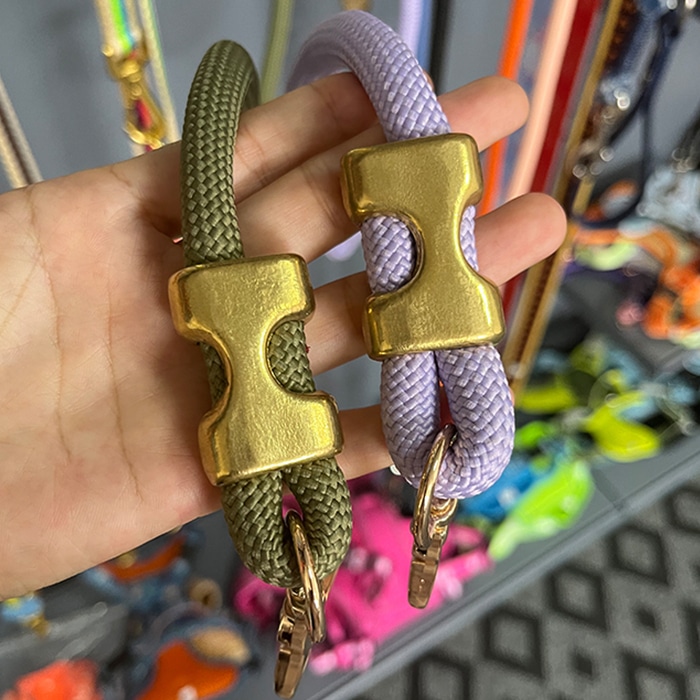
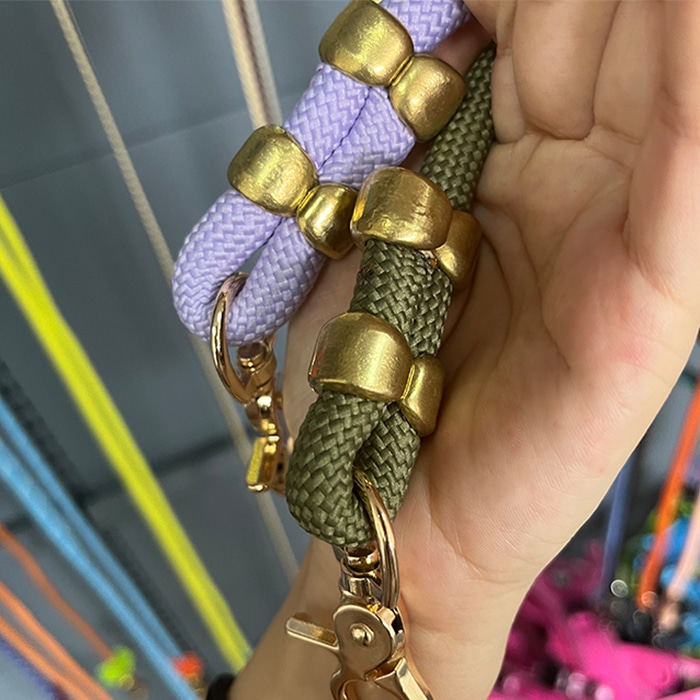
Sizing Guide: Matching Rope Diameter to Dog Breed
Rope diameter and length should be matched to dog weight, following general industry guidance:
- Small dogs (5-10kg): 6-8mm nylon rope dog lead, 100-120cm length
- Medium dogs (10-25kg): 8-10mm double-braided dog leash, 120-150cm length
- Large dogs (25kg+): 10-12mm marine rope dog leash, 150cm+ length, with upgraded high-load O-ring hardware. Most factories offer standard S, M, and L sizing for a marine rope dog leash line, while also supporting custom diameter, length, color, and hardware specifications for buyers building out a full product line.
Sourcing Checklist for a Double-Braided Dog Leash Factory
Buyers evaluating a new supplier for a nylon rope dog lead program should confirm the following before placing a bulk order:
- Request the color chart and rope diameter spec sheet, and confirm low-MOQ sampling is available.
- Ask for material certification confirming solid brass hardware rather than plated alloy.
- Pull-test marine rope dog leash samples to verify breaking strength matches the intended product tier.
- Confirm logo customization method (laser engraving vs. embossing) and sample turnaround time.
- Clarify bulk production lead time, color-consistency tolerance, and inspection process before shipment.
Conclusion
A double-braided dog leash may look like a simple pet accessory, but rope construction, marine rope material performance, and solid brass hardware corrosion resistance all directly affect how the finished nylon rope dog lead performs after months of real-world use. For buyers sourcing a marine rope dog leash from China, working with a factory that can provide clear technical data, support low-MOQ sampling, and confirm solid brass hardware production capability is the fastest way to reduce quality risk and build a stable long-term supply chain.